
Blog
The Tide Is Turning for Sharks And Brazil Is Shifting The Current

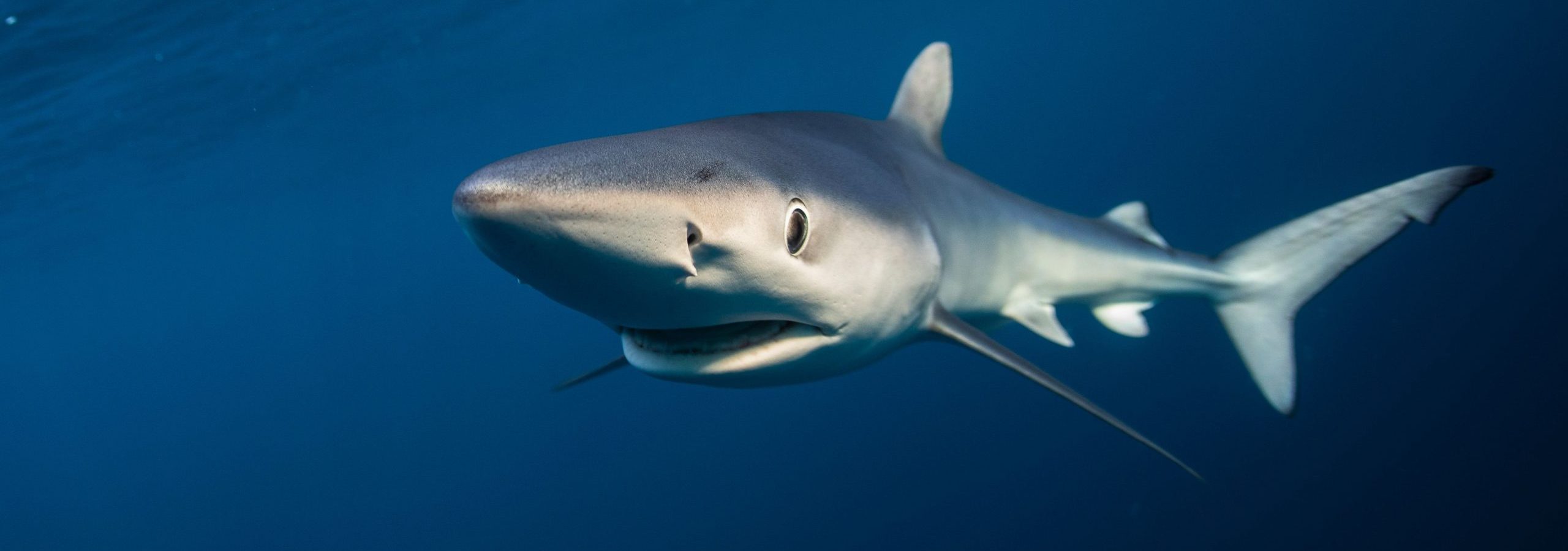
Foto: Kogia / Cedric Dageville
Brazil Can Turn From Largest Consumer Of Sharks To Sentinel of a Global Turn for Shark Conservation
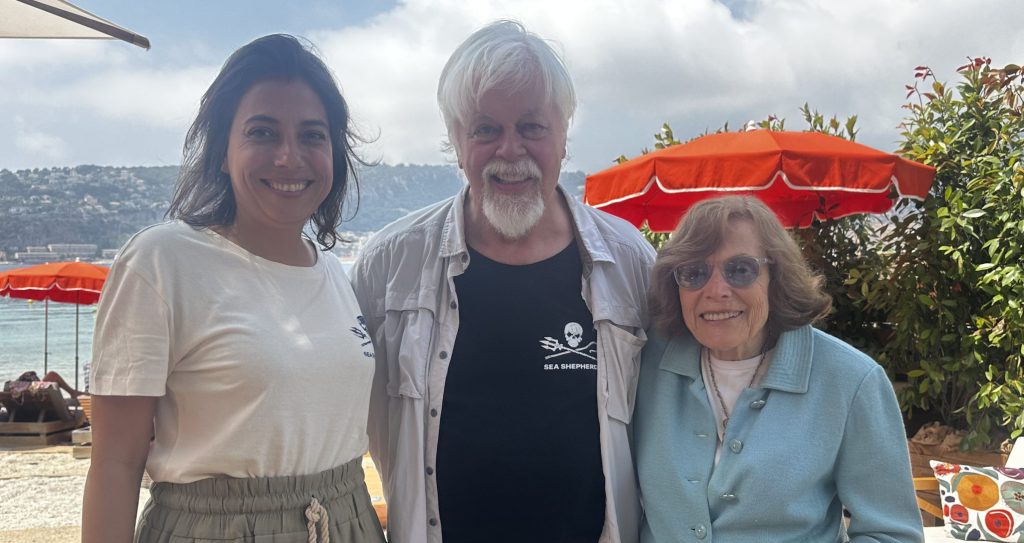
By Nathalie Gil, Sea Shepherd Brasil president
For too long, sharks in Brazil have been treated as collateral. For too long they were not seen as ancient wildlife or apex regulators of living marine systems. They stopped being considered as beings whose continued existence is inseparable from ocean stability. Instead, they were treated as export units, anonymous meat, and negotiable losses within a fisheries model built to normalize depletion.
Starting this week, the model is beginning to crack.
Brazil is a country that for years was at the opposite end of shark protection. The largest importer and consumer of sharks worldwide, it was a fundamental part of the shark fin trade and the decay of these species. However, the country has just taken a meaningful (yet still incomplete) step toward greater protection for sharks. Through a new stricter export regulation for blue shark (Prionace glauca), grounded in a well-designed CITES Non-Detriment Finding (NDF), this measure does not solve the problem completely. It does not end commercial shark fishing nor fin trade. Brazil’s domestic rules still continue to lack the level of protection the science now exposes. But it signals something important: pressure is working, science is becoming harder to ignore, and the political cost of treating sharks as disposable is rising.
Foto: Kogia / Sophie Hart
This did not happen by accident...
It is the result of years, if not decades, of pressure by academia and civil society, including Sea Shepherd Brasil’s investigations, advocacy, litigation, public campaigns, and sustained confrontation with a system that has hidden shark exploitation behind vague terms, weak controls, and selective science.
It is also the result of robust academic evidence: one far more comprehensive than the narrow readings often used to comfort the fishing sector or accommodate ICCAT logic. It shows biological vulnerability, unsustainable pressure, trade opacity, and the urgent need for precaution. The new Brazilian NDF itself acknowledges the blue shark as a migratory top predator under heavy commercial pressure for both meat and fins, and recognizes the need for precaution in light of the species’ latent vulnerability in the South Atlantic.
What is now an unquestionable recognition matters beyond one species.
While the current export framework focuses on Prionace glauca, the problem is a system that treats sharks and rays, a group of species with extreme biological vulnerability, broadly as extractable inventory while hiding species identity, masking public health risk, and preserving the dangerous illusion that wildlife fauna predation at industrial scale can remain ecologically harmless.
A new regulation
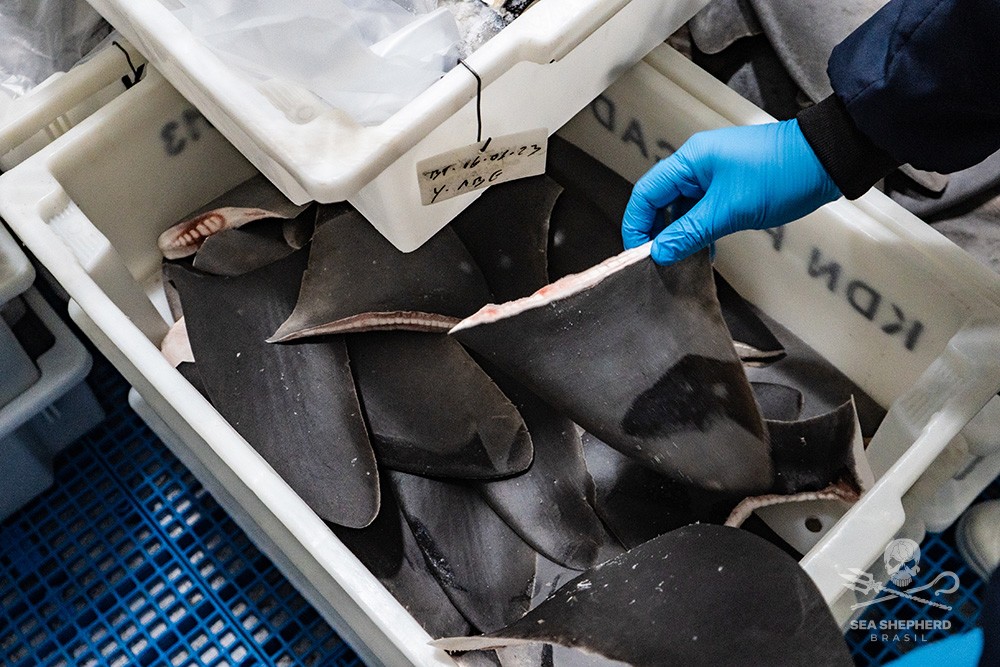
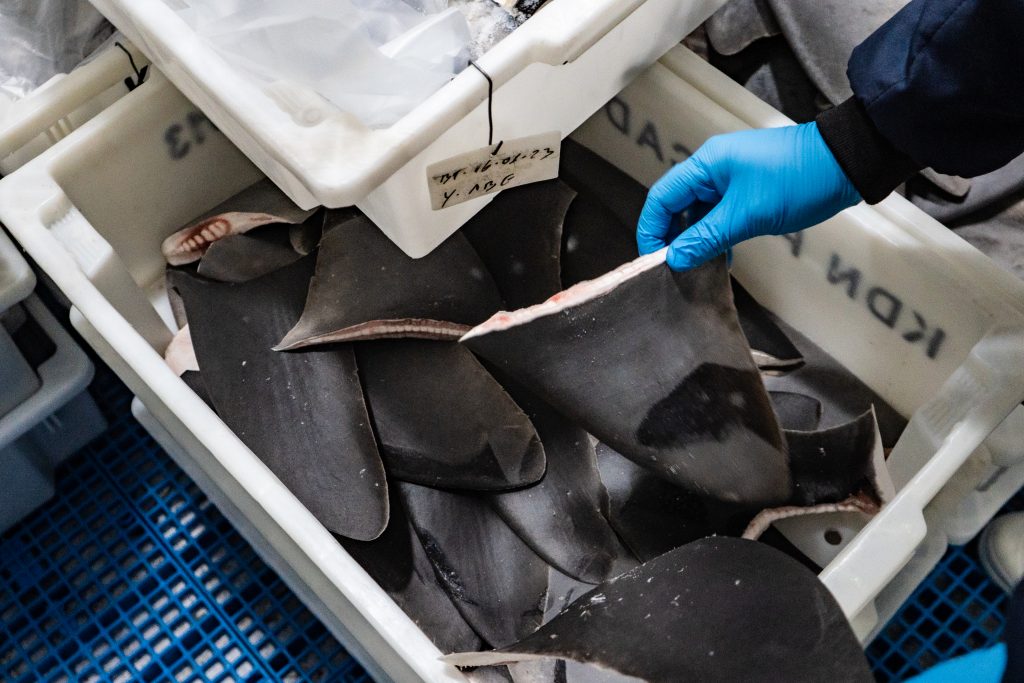
Real advances are presented by a new regulation launched this week at COP15 of the Commission of Threatened Species in Campo Grande, Brazil. It is issued by IBAMA – the Brazilian authority responsible for regulation of threatened animals for export. Detached shark fins can no longer be exported: fins must remain naturally attached to the body. Blue sharks cannot be treated as a target species for export-oriented fishing, which means that vessels must report less than 20% of this species captured per fishing effort.
Females must be released, as they are critical for population recovery and can be caught pregnant. Individuals below minimum size and weight thresholds that indicate maturity must be released – an important restriction when the reality is that around 70% of fishing efforts catch juveniles in areas with an abundance of sharks, such as Rio Grande Elevation. Wire leaders near hooks are prohibited. Imports of shark species listed as threatened in Brazil are prohibited. Species identification requirements and documentation obligations were strengthened. IBAMA also may require contaminant testing for imports and exports, at the expense of the sector, before authorizing international trade.
These are not cosmetic changes: they constrain the old machinery of opacity and make fraud, laundering, and species masking more difficult. This also makes longline surface fishing in critical areas for sharks completely obsolete for fleets that depend on exports of blue sharks.
Foto: Kogia / Dario Nessi
Some will look at the absence of a total fin export ban and call this a failure. That reading is too simple. At this stage, a complete immediate ban on fin exports might have triggered exactly the wrong institutional reaction: disengagement from the NDF framework, greater resistance from the fishing sector, and an accommodation of the status quo of less transparent internal commercialization in light of the insufficient Portaria 30/2025, a joint normative by the Ministry of Fisheries and Ministry of Environment launched last year that opened for targeted fishing of blue sharks. A resounding step backwards in shark conservation.
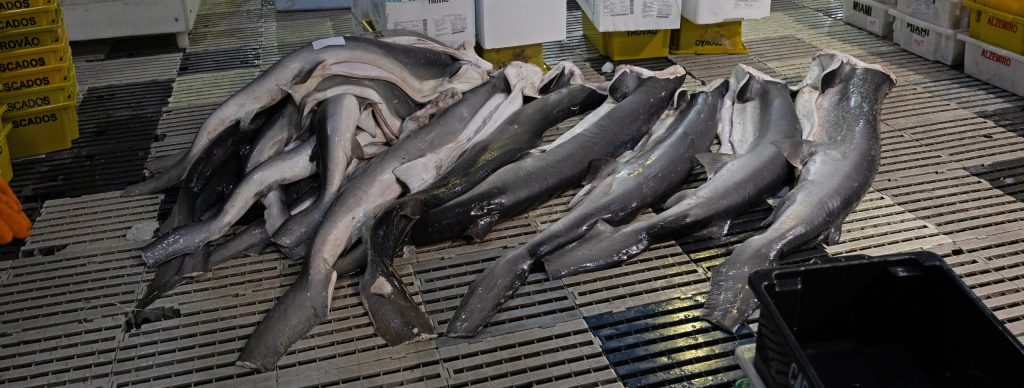
Requiring fins to remain attached thus reduces the classic mechanisms of finning, improves traceability, and makes species identification substantially more feasible. In a sector that profits from remaining unindustrialized, for its lack of transparency and dissemination of misinformation, keeping the body and the fin together is already a form of truth-telling.
But no one should confuse a tactical gain with systemic resolution. The real battle now moves inward.
Foto: Sea Shepherd Brasil
Brazilian responsibility
With the most robust and reliable data now available comes great responsibility. Brazil cannot sustain commendable stricter export logic while maintaining weaker domestic rules. As a country that has a well-developed and systemic internal trade for the consumption of sharks, it is incoherent to claim the principle of precaution for exports only, while being extremely permissive at home. We see the export rule as only the beginning; what must follow is alignment: stronger domestic protection, repeal of permissive rules that contradict the conservation logic now supported by the best available data, and full traceability and transparency from catch to plate, no matter where the plate is.
The shift is also unfolding on this front: general consumption.
Sea Shepherd Brazil’s litigation against the Brazilian state forced the federal court to recognize what should never have required judicial intervention in the first place: that selling shark and ray meat under the generic term cação in Brazil obstructs species control, conceals threats to biodiversity, and exposes consumers to serious toxicological risk. Two weeks ago the court ordered the federal government to identify species and traceability in all public procurement at the federal level, and to present within 90 days a systemic plan for traceability, species identification, and sanitary control, including contaminants, under penalty of daily fines.
This is more than an administrative correction, it is a now legal recognition that the word cação has functioned as cover for ecological destruction, for public disinformation, and for the normalization of contaminated wildlife in institutional food systems.
And the implications are larger than procurement.
Foto: Gary Stokes
Brazil is at the heart of the issue of consumption of sharks and rays, as it has developed a structural chain of commercialization stimulated by the need to destine the carcasses of this millionaire business. Sea Shepherd Brasil’s own public-facing campaign Cação is Shark, supported by scientific sources and advocacy work, have repeatedly shown how this invisibility sustains both environmental and health harms. Shark meat is not only linked to a conservation and animal rights issue. It is also a public health scandal. Dozens of historical studies have identified elevated levels of mercury, arsenic, cadmium, and lead in sharks and rays, with some pointing to particular concern for children, pregnant women, and populations exposed through repeated consumption.
The federal court finally recognized that risk. IBAMA’s new normative now partially recognizes it too. Legislative bills also progress in Congress and state-level assemblies demanding more transparency and bans on procurement. Another signal of change has also emerged from Hospital das Clínicas, Brazil’s leading public hospital, that has now committed to banning the procurement of shark meat. Companies such as Sodexo, the largest catering brand in Brazil, have already put in place policies that prohibit cação on their menus. Municipalities such as Santos and São Paulo have already banned cação in their public meals. State-level bans were already put in place in Paraná and Rio de Janeiro (Rio de Janeiro only prohibits shark meat in public school meals as of yet).
This convergence matters. It matters because shark consumption in Brazil has long survived not only through individual ignorance, but through normalized institutional purchasing. When hospitals, schools, prisons, and public food systems stop legitimizing cação, the market loses one of its quietest pillars. It means disinformation is finally weakening across the three political powers at all levels, also in public and private spaces.
The currents are shifting, and the system that sustained this model is beginning to collapse – which is why Brazil matters so much globally right now.
Brazil is not just another smaller shark-fishing country. It is a revealing test case of how the world’s shark fishing market actually operates: fins move through international markets, carcasses are diverted into low-transparency food systems, threatened species are washed through generic naming, and weak governance is defended in the language of regulation.
If Brazil continues to dismantle this model through science-based export controls, judicial recognition of traceability, pressure on institutional demand, and a refusal to let sharks remain invisible, as it signaled this week, it can help establish a new standard far beyond its borders. It can become a sentinel state: not because it has solved the problem, but because it is exposing it so widely and clearly enough that there is no other option than to provoke change to protect all shark and ray species.
There was never a better opportunity for sharks than right now, and Brazil is where all must be looking at.
We should not celebrate prematurely, but recognize that the tide is turning, and push harder precisely because it is. Brazil is finally the first large protagonist in the whole dynamics of shark trade that has started to move boldly: Brazilian society has never been more ready and willing for this shift to happen. Its international influence on environmental issues has never been greater. Now it must decide whether the bans only for exports was an exception, if the old tactics of economy-first until collapse will steer this back, or if Brazil now reflects its solid measurement also for internal commercialization, thus Brazil setting the example and becoming global reference for the stewardship of sharks, just as it is for wildlife on land.
Foto: Kogia / Michele du plooy